The Guinea Shed's Vitamin C Routine
April 4, 2026
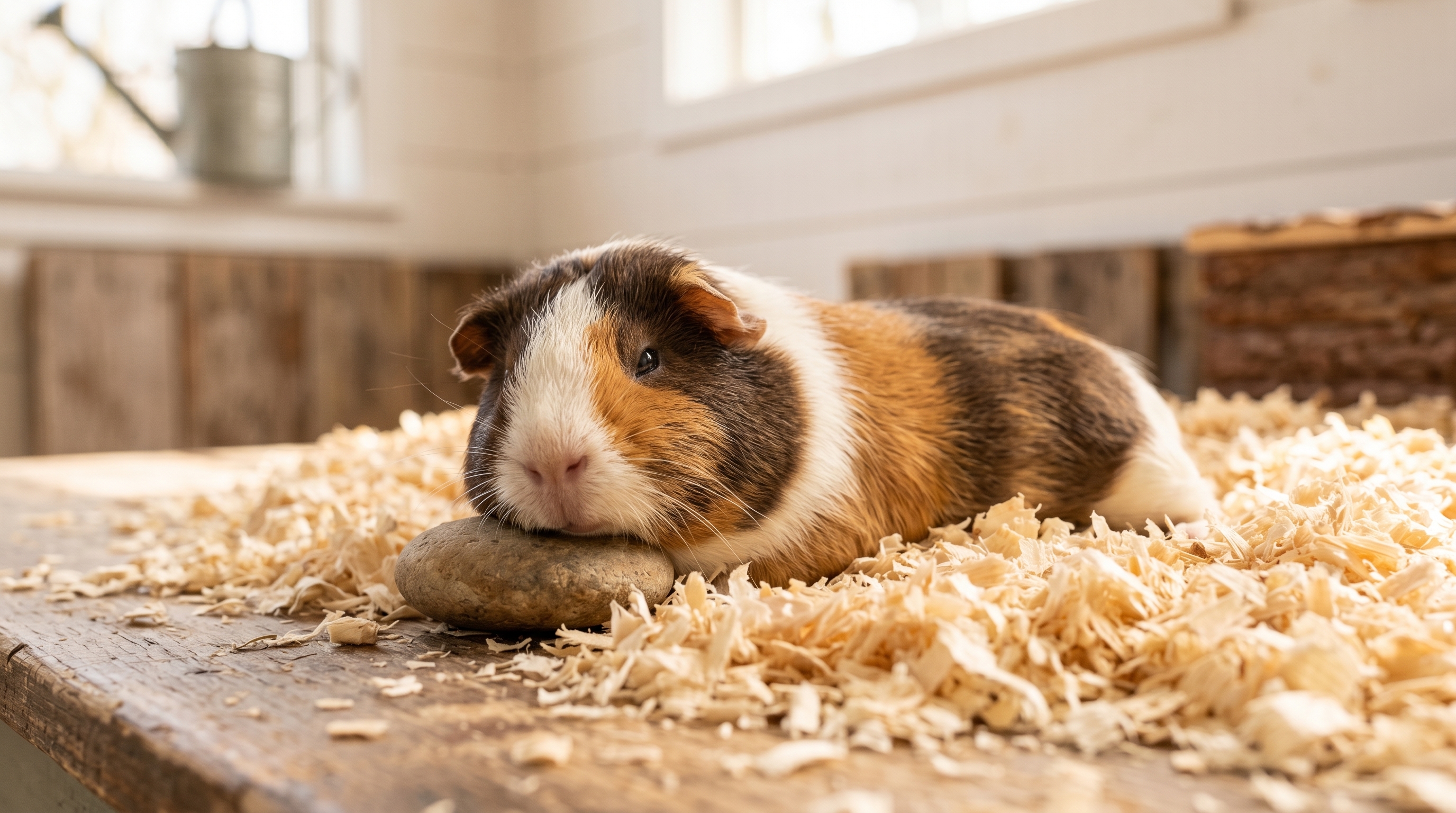
Guinea pigs are one of the few mammals, alongside humans and primates, that cannot synthesize their own Vitamin C. They get it entirely from diet. When they don't get enough, the symptoms — lethargy, rough coat, swollen joints, reluctance to move — show up within a few weeks. The good news is it's completely preventable with a consistent vegetable routine.
The anchor vegetable: bell pepper
Red bell pepper has more Vitamin C by weight than an orange. A one-inch strip of red bell pepper per pig per day covers their baseline requirement. We give it every single day without exception. The pigs have strong opinions about color — Biscuit will eat red or yellow but turns her nose up at green. Mochi will eat anything. Juniper prefers it seeded. Fig doesn't care as long as it arrives promptly.
What else we rotate
Beyond bell pepper, we rotate through romaine lettuce, cucumber, cilantro, and parsley as the weekly staples. Kale and spinach are high in calcium and oxalic acid, so we keep those to once or twice a week. Fruits are treats, not staples — the sugar content adds up fast. A small piece of strawberry or apple once a week is plenty.
What to avoid
Iceberg lettuce (basically water with no nutrition), potatoes, onions, garlic, rhubarb, and anything from the allium family. Avocado is toxic. Most nuts and seeds are too high in fat. The rule of thumb: if it's nutritionally dense for humans, it's probably fine in small amounts. If it's processed, starchy, or high in sugar, skip it.
Enjoying this post?
Subscribe to get care tips and new posts delivered to your inbox.