How to Bond Two Guinea Pigs Who've Never Met
April 11, 2026
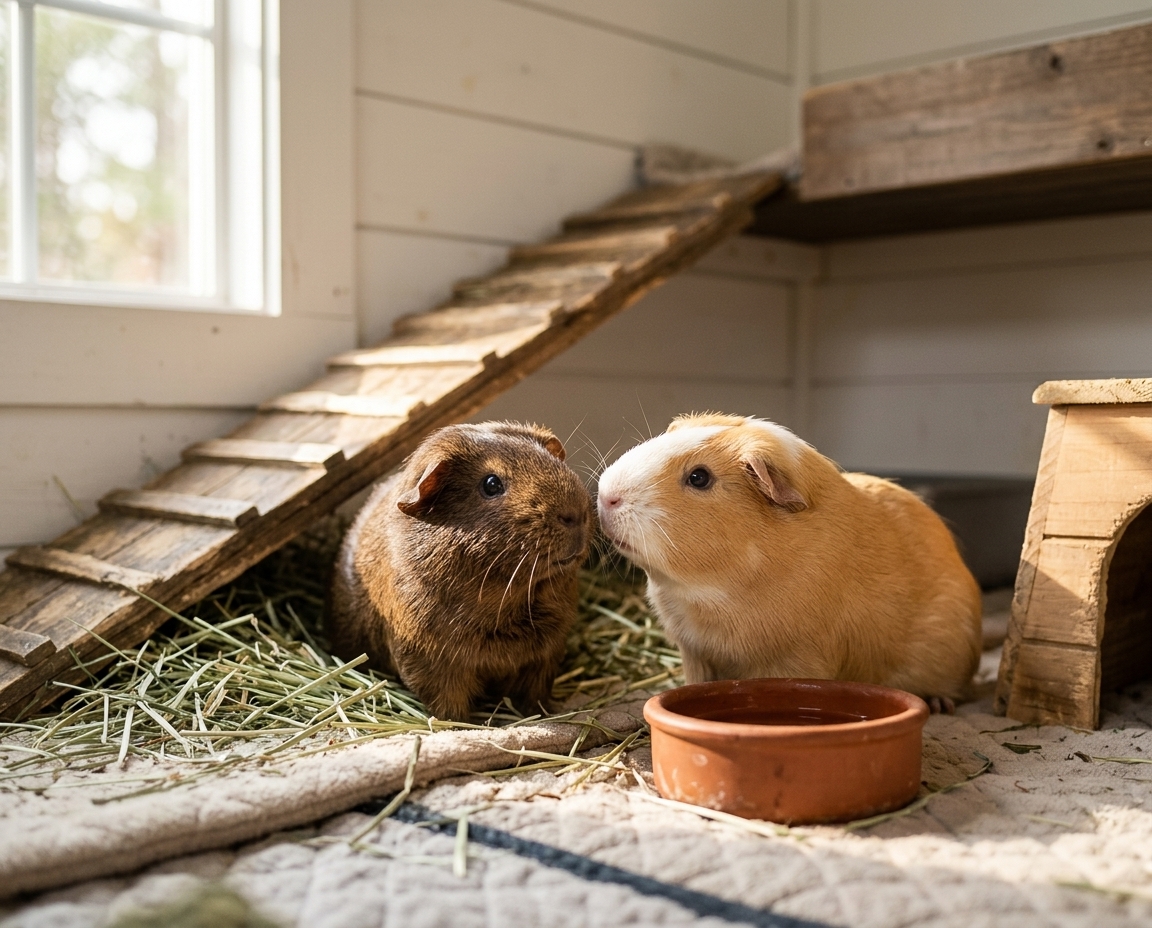
When Mochi came home, Juniper had been an only pig for six months. The introduction took about forty minutes in a neutral space, involved a rumblestrutt standoff, three popcorns, and one completely undramatic moment where they just started eating hay side by side like they'd always done it. That's usually how it goes — less dramatic than you expect, more stressful for the human than the pigs.
Use neutral territory
Don't introduce a new pig directly into the resident pig's cage. That's their territory and they will defend it. Use a space neither pig has been before — a bathtub lined with fleece works well, or a penned-off area of the floor. Scatter hay and a few vegetables so there's something to do besides stare at each other.
What's normal vs. what's a problem
Rumblestrutting (a low vibrating sound while swaying side to side) is normal dominance behavior — let it play out. Teeth chattering, raised hackles, or any actual biting means you separate them and try again another day. Most introductions succeed within one or two sessions. If you're consistently seeing teeth chattering and aggressive chasing, those two pigs may just not be compatible, and that's okay.
After the introduction
Once they've spent time together without major incident, move both pigs into a thoroughly cleaned cage — scrub it down so it smells like neither of them. Rearrange the hides and food bowls. Have duplicate hides, bowls, and water sources so the dominant pig can't monopolize everything. The first week in a shared cage usually involves a few more dominance displays, then things settle.
Enjoying this post?
Subscribe to get care tips and new posts delivered to your inbox.